Integrating Barcode, Spoon, Fork and Knife, Vector Assets into Professional Design Workflows
In the modern digital design landscape, efficiency is not merely a preference; it is a structural necessity. Whether you are a freelance graphic designer, a small business owner managing your own branding, or a hobbyist creating handmade crafts, the quality of your raw materials dictates the quality of your final output. This is where specialized digital assets like Barcode, Spoon, Fork and Knife, Vector graphics become critical components of a streamlined creative process. These are not just simple images; they are foundational elements that, when used correctly, can accelerate production timelines while maintaining high visual standards.
Understanding how to leverage these specific vector files requires a shift in perspective from viewing them as static pictures to treating them as flexible, scalable tools. The core value proposition lies in their technical construction: created in Adobe Illustrator, these files are resolution-independent. This means they can be scaled from the size of a business card to a large-format wall art piece without any loss of clarity or pixelation. For professionals who need to adapt a single design concept across multiple mediums—such as stationery, invitations, and web banners—this scalability is non-negotiable.
Technical Specifications and File Compatibility
To integrate these assets effectively, one must first understand the technical environment in which they operate. The Barcode, Spoon, Fork and Knife, Vector package is typically delivered in three primary formats: SVG, JPG, and PNG. Each format serves a distinct purpose in the workflow pipeline.
- SVG (Scalable Vector Graphics): This is the master file for editing. Because it is vector-based, it allows for infinite resizing. It is ideal for logo design, cutting machines for handmade crafts, and any application where crisp lines are required regardless of scale.
- PNG (Portable Network Graphics): These files usually come with transparent backgrounds. They are essential for layering elements in composite designs, such as placing a fork and knife icon over a textured paper background for an invitation without a white box surrounding the image.
- JPG (Joint Photographic Experts Group): Best suited for quick previews or web use where transparency is not required. They are smaller in file size but lack the editing flexibility of vectors.
The source files are crafted with an artboard size of 12 x 12 inches at a resolution of 300 DPI in the RGB color palette. This specific configuration ensures compatibility with both digital screens and high-quality print processes. While RGB is native to digital displays, the high resolution ensures that when converted to CMYK for printing on paper items or party decor, the details remain sharp and professional.
Strategic Application Across Creative Projects
The versatility of Barcode, Spoon, Fork and Knife, Vector elements allows them to fit seamlessly into various stages of a project. Their application extends far beyond simple illustration, influencing branding, user experience, and physical product design.
Branding and Identity Development
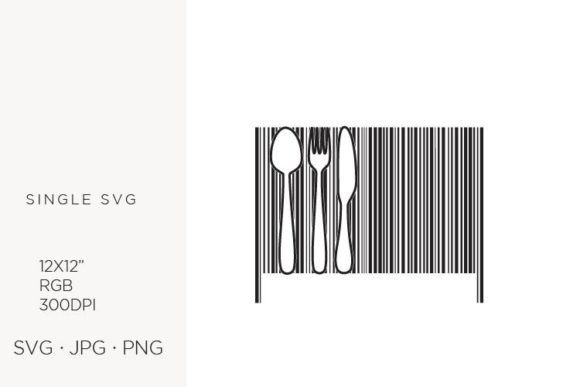
For restaurants, catering services, or food bloggers, these icons are pivotal in establishing visual identity. A vector-based spoon, fork, and knife can be manipulated to create a unique logo mark. Because the files are made in Adobe Illustrator, designers can adjust stroke weights, combine shapes, or alter colors to match brand guidelines precisely. This ensures consistency across all touchpoints, from the website header to the printed menu. The inclusion of a barcode element adds a layer of modern utility, potentially linking physical packaging to digital experiences, such as nutritional information or online ordering systems.
Print Media and Stationery
When designing invitations, announcements, or handmade cards, the quality of the graphic elements directly impacts the perceived value of the final product. Using high-resolution vector files ensures that when these designs are printed on premium paper stocks, the edges of the cutlery icons remain crisp. There is no blurriness or jagged pixels, which is a common issue when using low-resolution raster images. This attention to detail is crucial for wedding invitations, corporate event announcements, or upscale party decor where aesthetic precision is paramount.
Digital and Web Design
In the realm of web design, SVG files are increasingly preferred due to their small file sizes and scalability. Incorporating Barcode, Spoon, Fork and Knife, Vector graphics into a website’s interface can enhance user navigation. For instance, these icons can serve as intuitive buttons for menu sections, reservation links, or gallery categories. Their clean lines render perfectly on high-density retina displays, ensuring a polished look across all devices, from smartphones to desktop monitors.
Workflow Integration and Efficiency
Adopting these assets into your regular workflow requires a systematic approach to organization and implementation. Here is how to maximize their utility:
- Preparation and Organization: Upon downloading, organize the files into clearly labeled folders by format (SVG, PNG, JPG). This reduces time spent searching for the correct file type during tight deadlines. Keep the original Adobe Illustrator source files archived for future modifications.
- Compatibility Checks: Before starting a major project, test the SVG files in your intended software. While most modern design tools support SVG, some older platforms may require conversion. Ensure your workflow accounts for this potential step.
- Customization: Do not use the assets "as-is" if uniqueness is required. Use the vector nature of the files to tweak proportions or combine elements. For example, integrate the barcode pattern into the handle of the spoon for a tech-meets-dining aesthetic.
- Quality Control: Always preview your designs at 100% zoom before finalizing. Check for alignment issues and ensure that colors translate well between screen (RGB) and print (CMYK) if the project involves physical outputs like jewelry packaging or printed paper items.
This structured approach minimizes errors and rework, allowing creators to focus on the artistic aspects of their projects rather than troubleshooting technical issues. It transforms the asset from a simple download into a reliable component of a professional toolkit.
Long-Term Value and Versatility
The true measure of a digital asset’s worth is its longevity and adaptability. Barcode, Spoon, Fork and Knife, Vector files are not limited to a single campaign or season. They can be repurposed across years of content creation. A set of cutlery icons designed for a summer BBQ invitation can be recolored and reused for a winter holiday dinner menu. The barcode element can be updated with new data while retaining the same visual style, ensuring brand continuity.
Furthermore, these elements support a wide range of industries. Educators can use them in culinary arts presentations; marketers can incorporate them into social media graphics for food promotions; and entrepreneurs can use them to design packaging for artisanal food products. The ability to scale these graphics for everything from small jewelry tags to large wall art installations makes them a cost-effective investment for any creative professional.
In conclusion, integrating high-quality vector assets like Barcode, Spoon, Fork and Knife, Vector into your design process is a strategic move towards greater efficiency and professional polish. By understanding the technical specifications, planning their application across various media, and maintaining an organized workflow, creators can unlock the full potential of these digital tools. Whether you are designing a complex brand identity or a simple handmade card, the right assets provide the foundation for exceptional results.